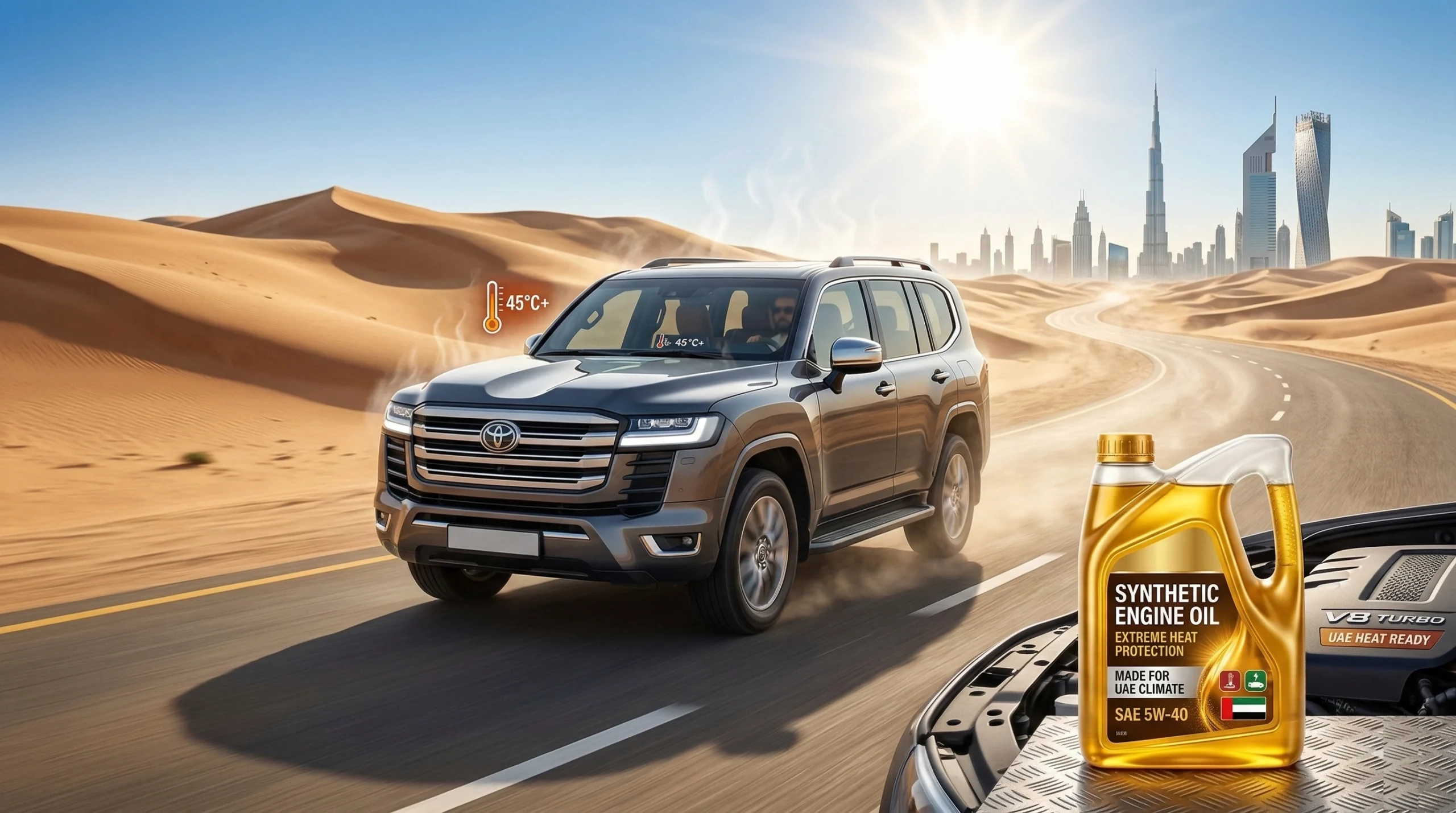
When summer arrives in the UAE, temperatures regularly soar past 45°C. Your car’s engine works harder than ever, and the oil inside it faces extreme stress. In these conditions, the type of oil you choose makes a significant difference between an engine that lasts for years and one that fails prematurely.
If you are driving in the UAE, you need to understand why synthetic engine oil UAE drivers trust is essential for protecting your vehicle. This comprehensive guide explains everything you need to know.
How Extreme Heat Affects Your Engine Oil
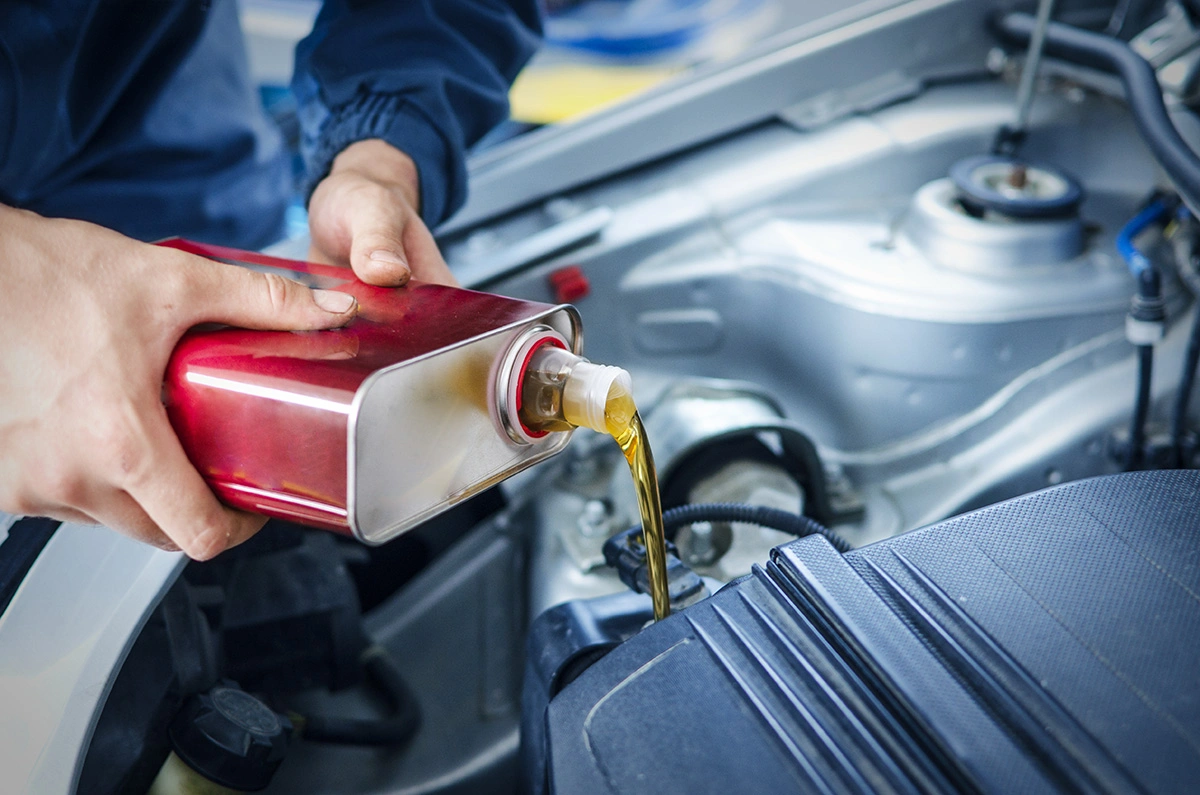
Engine oil serves as the lifeblood of your vehicle. It lubricates moving parts, reduces friction, carries away heat, and protects against wear. However, extreme heat fundamentally changes how oil behaves.
Thermal breakdown occurs when high temperatures cause oil molecules to break apart. Conventional oils, which contain molecules of varying sizes, break down unevenly. This creates sludge and deposits that clog oil passages and reduce engine efficiency.
Viscosity thinning is another serious concern. When oil gets too hot, it becomes thinner. If it thins too much, it cannot maintain a protective film between metal surfaces. Metal-to-metal contact occurs, leading to accelerated wear and potential engine failure.
Oxidation accelerates dramatically in high heat. Oil reacts with oxygen, forming acids and varnish-like deposits. These contaminants thicken the oil, reduce its ability to flow, and attack engine components.
In UAE conditions, these problems happen faster than in milder climates. Your oil works harder and degrades quicker. This is precisely why synthetic engine oil UAE drivers rely on makes such a crucial difference.
What Makes Synthetic Oil Different?
Synthetic oil is not simply “better refined” conventional oil. It is entirely engineered at the molecular level for specific performance characteristics.
Uniform molecular structure sets synthetic apart. Unlike conventional oil, which contains molecules of various sizes and shapes, synthetic oil consists of consistently sized molecules. This uniformity means it flows more predictably and provides more consistent protection.
Engineered for stability means synthetic oil resists thermal breakdown at much higher temperatures. While conventional oil may start breaking down around 120°C, quality synthetics remain stable well beyond 150°C. This matters greatly when your engine operates in 45°C ambient heat.
Better cold flow might seem irrelevant in a hot country, but consider this: your engine experiences the greatest wear during startup, before oil fully circulates. Synthetic oil flows more easily when cold, reaching critical components faster and reducing startup wear.
Key Benefits of Synthetic Engine Oil in UAE Conditions
1. Superior High-Temperature Protection
The primary advantage of synthetic engine oil UAE drivers need is its ability to maintain protective viscosity at high temperatures. Your oil continues to cushion bearings, lubricate pistons, and protect camshafts even when the thermometer hits extremes.
2. Extended Oil Change Intervals
Because synthetic resists breakdown longer, it lasts significantly longer than conventional oil. While conventional oil might need changing every 5,000-7,500 kilometres, quality synthetics often extend to 10,000-15,000 kilometres. For high-mileage UAE drivers, this means fewer oil changes and less maintenance downtime.
3. Improved Engine Cleanliness
Synthetic oils contain superior detergent packages that keep engines cleaner. They suspend contaminants more effectively and prevent sludge formation. A cleaner engine runs cooler, more efficiently, and lasts longer.
4. Better Fuel Economy
Reduced internal friction from synthetic oil translates directly to fuel savings. The difference might be small per kilometre, but over a year of UAE driving, it adds up to real money saved at the pump.
5. Enhanced Protection During Stop-Start Traffic
Dubai and Abu Dhabi traffic means frequent stopping and starting. This driving pattern stresses oil as temperatures fluctuate. Synthetic oil handles these variations better, maintaining protection whether you are crawling in traffic or cruising on Sheikh Zayed Road.
Choosing the Right Synthetic Viscosity for UAE
Not all synthetic oils are the same. Viscosity grade matters significantly for your engine’s protection.
5W-40 represents an excellent all-rounder for most vehicles in UAE conditions. It flows well at startup while providing robust protection at operating temperatures. Many European and American vehicles specify this grade.
5W-30 suits many Asian vehicles, including popular Japanese and Korean models. It offers good fuel economy while providing adequate protection for normal driving.
0W-20 and 0W-30 appear in newer vehicles, particularly hybrids and modern economy-focused cars. These low-viscosity oils improve fuel efficiency but still provide excellent protection when formulated as synthetics.
10W-60 serves high-performance vehicles and some European sports cars. These engines generate extreme heat and need the thickest protection available.
Always check your owner’s manual first. Your manufacturer knows your engine best. However, many drivers in the UAE benefit from moving to the next viscosity grade during summer months, especially with older vehicles.
Why CHEMPIOIL Synthetic Oils Are Formulated for UAE Conditions
CHEMPIOIL understands the unique demands of driving in the United Arab Emirates. Our synthetic engine oils are specifically formulated to:
- Resist thermal breakdown in extreme desert heat
- Maintain protective viscosity during long highway drives
- Protect against the increased wear from dusty conditions
- Provide reliable performance across the full range of UAE driving conditions
Every bottle of CHEMPIOIL synthetic oil meets or exceeds international API and ACEA standards while being tuned for local requirements. We understand what UAE drivers need because we are here, driving the same roads, facing the same conditions.
Signs You Need to Switch to Synthetic Oil
If you are currently using conventional oil, watch for these indicators that it might be time to switch:
- Your engine runs hotter than it should
- You notice increased engine noise, especially on hot days
- Oil darkens very quickly after changes
- You drive in heavy traffic regularly
- Your vehicle has a turbocharger
- You plan to keep your car for many years
Any of these signs suggest that synthetic engine oil UAE conditions demand would benefit your vehicle.
Common Myths About Synthetic Oil
“Synthetic oil causes leaks in older engines.” Modern synthetics include seal conditioners that actually help prevent leaks. Older engines with existing leaks might leak slightly more with any oil, but synthetic does not cause new leaks.
“You cannot switch back and forth.” Synthetic and conventional oils are completely compatible. You can switch at any time without harm.
“Synthetic oil is too expensive.” Consider the complete picture. Synthetic costs more per litre but lasts longer and provides better protection. When you factor in extended drain intervals and reduced engine wear, synthetic often costs less over time.
Conclusion
Your engine faces extreme challenges in UAE heat. Conventional oil, designed for milder climates, simply cannot provide the protection your vehicle needs. Synthetic engine oil UAE drivers trust delivers superior performance, longer engine life, and better overall value.
Whether you drive a family saloon through Sharjah traffic, a 4×4 across desert dunes, or a luxury car along Dubai streets, CHEMPIOIL has the right synthetic formulation for your needs.
Protect your investment. Choose synthetic. Choose CHEMPIOIL.